Sunday, December 18, 2011

Bonus Time


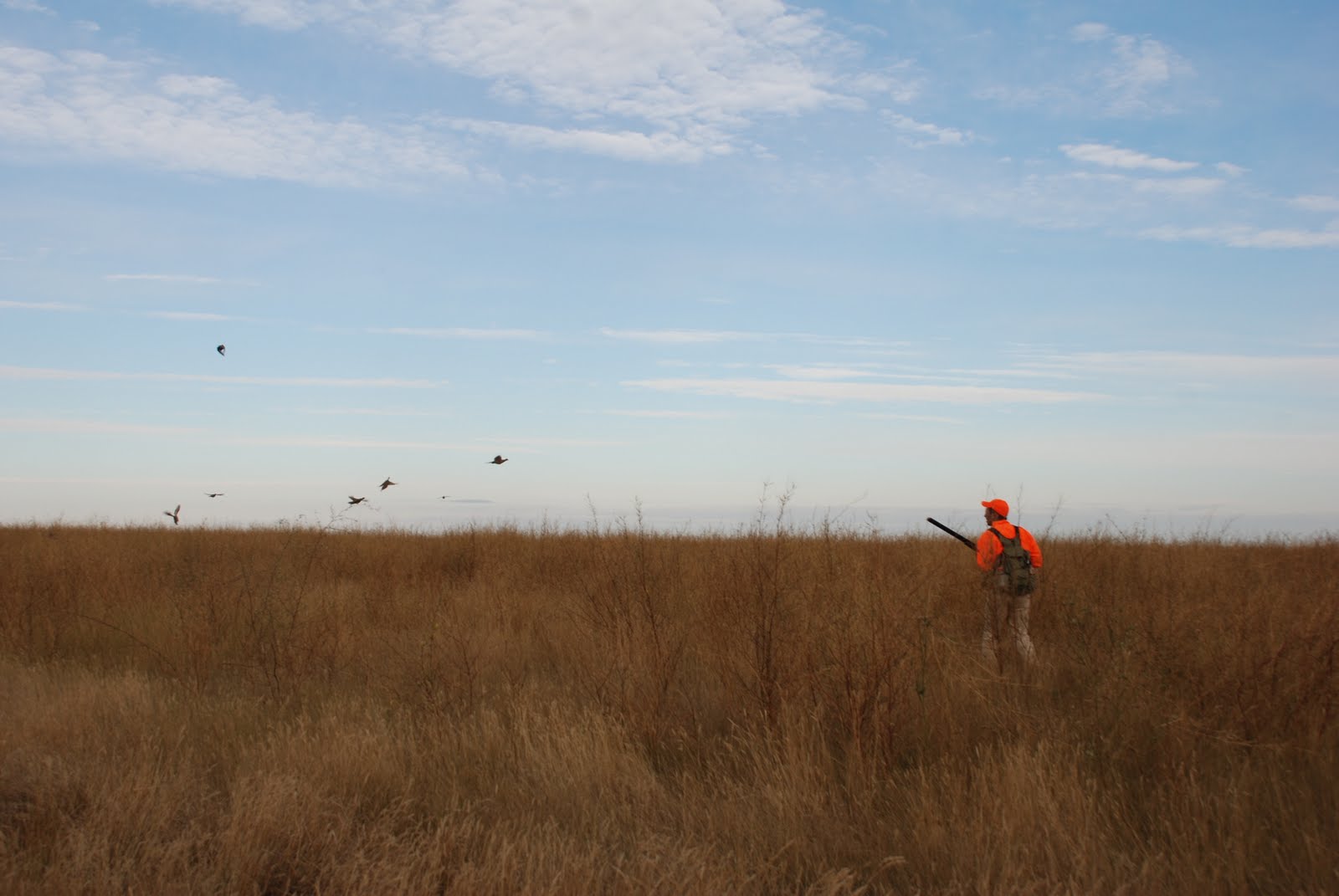
In Montana and other states such as the Dakotas, some autumns our upland seasons end early, occasionally as early as Halloween. Snow can fill the grasslands completely, often icing over, creating a crust that is unfriendly to both dogs and birds. Sure, the birds are still out there, but often they congregate in farm yards, making them off-limits and just as well, if they are subject to five months of winter survival.

Thus far, 2011 has been a wingshooter’s blessing. There has been only one significant snowfall to date and the bulk of that has melted. Pheasants are still seeking refuge in tall CRP and Hungarian partridge are spending their time, well, where you find them. I am still seeing coveys in stubble fields and the shorter grasses, and on sunny hillsides. All of a sudden I am making up for lost time, days that were taken up by work, big game hunting and other necessities of life.

Despite the obvious added hunting opportunities for hunters and our beloved gun dogs, perhaps the biggest benefactor is the birds themselves. They are still enjoying the good life, having plenty of access to food and continuing to put on fat reserves to survive the winter ahead. Fortunately, we are already down to just three months of it.

Tuesday, November 29, 2011

Time To Come Clean


My name is Jay and I am a bird hunter.

That is my only explanation after finishing my 2nd big game season in a row without shooting an elk, antelope or deer. I guess I just shoot birds. Not the worst habit to have, but is it better to be a specialist or be mediocre at a handful of pursuits?

Granted, I passed on a cow elk, two miles downhill from the truck, the day after Thanksgiving. On the final day of Montana's big game season, I also chose not to shoot a decent muley buck, after watching him through my scope for a few minutes. I was after a whitetail this year. And, I haven't drawn an antelope tag in two years. But, I live in the middle of Montana, so no excuses will suffice.

But, if you find yourself racing home from deer hunting at 9AM on the final day of the rifle season, to pick up your bird dogs and go hunt pheasants somewhere, you might be a bird hunter. The pheasants came easy this Sunday, the dogs had a great time and I hunted in a t-shirt in late November. To heck with deer and elk.

Sure am glad that Dad shared some of his elk meat, though.

Saturday, November 12, 2011

Finishing In The Sage

Upon returning to Montana from a trip to MN, where ruffed grouse and woodcock were on the menu, I added a couple of days to hunt pheasants once I crossed the border. Needless to say, shooting a big October rooster seemed like child's play, after fighting to get shots at crafty ruffs and diminutive woodcock in the North Woods.
Eventually I had to return to my email, voicemail and old school mail.
However, as I was nearing my home in central Montana, it dawned on me that the sage grouse season was about to close November 1st. Since I hadn't hunted sage grouse in a couple of years or so and I was in the midst of prime sage grouse country, I pulled over. The dogs were 7 days into a fairly intense road trip, but when their dog box opened, they still showed the same excitement they did a week earlier.
I grabbed just enough water for the dogs with about an hour hunt in mind. I headed for a large sage flat on public land where I had seen birds a few years ago. It was a case of deja vu, as the dogs became birdy on the same knob, pointing the same flock of sage grouse, which flushed in the same direction as years before. Obviously the birds were a newer generation, but everything else was a repeat. I only shot one big male sage grouse, not needing to shoot another majestic, native bird that is struggling in some parts. I headed back to the truck, but not before the dogs also found two coveys of Huns, which added to my mixed bag of birds very nicely, putting an exclamation point on my 2011 upland odyssey.

Saturday, October 29, 2011

A Drop in the Bucket

Fish mortality associated with irrigation ditches is a problem throughout the West. In Montana alone it is probable that hundreds of thousands, if not millions of fish (not all are trout) perish in irrigation ditches on an annual basis.

Trout Unlimited is working to raise funding for, and install screening on irrigation ditch headgates, but progress is slow. Additionally, many regional TU chapters are hosting events in cooperation with landowners to rescue fish stranded in irrigation ditches.

A fishing buddy and I recently held our own unsanctioned fish rescue on the irrigation ditch that runs by my house. This ditch diverts water from the Gallatin River, and likely claims the lives of thousands of fish every year. In about two hours of work with a boat net, a bucket and a sheet of window screening we managed to rescue nearly 100 fish. Many of them were fingerling whitefish, but a number of them were fine brown trout that belong in the river.

Our efforts were just a drop in the bucket, but every bit helps. Contact your local TU chapter to learn more about opportunities to get involved.

Monday, October 10, 2011

Pleasant Pheasant Surprise


Most of us Montana bird hunters headed into the 2011 pheasant season with lowered expectations. Winter was pretty brutal, as it started early and lasted until April, without a lot of reprieve throughout. When spring did arrive, the state was saturated, with above average rainfall and a fair amount of lowland flooding. It was an unfortunate “perfect storm” scenario.

However, thirty minutes into the opener, I commented to Ryan that there were enough birds to hunt this fall, despite the negative outlook by wildlife biologists, farmers and hunters. By ten o’clock, when we had our limit of six roosters, I upgraded my description from “enough” to “average numbers". In one field alone, we moved probably 50 birds in a mile-long walk. However, there were areas that were fairly void of birds, but typically have held pheasants in the past. Over the course of the weekend, we did put on a few fruitless miles too. But, overall, there was plenty of action and good dog work.

The trade off for more birds than expected, was the quality of the birds. According to Ryan’s dad, who is a rancher and spends a good amount of time on the land, many pheasants had an unsuccessful first hatch, but managed a very successful second hatch, due to the lush grass that developed. Since many of the late hatches occurred around August 1st, the evidence was present this opener. We saw pheasants that would cackle like a rooster, but had no coloring whatsoever. One flock of pheasants were the size of Hungarian partridge. We vowed to select only the mature roosters over points by the dogs, but despite the attempt, we still ended up with a few young birds.

It was a pleasant surprise to see what Mother Nature can giveth after she taketh away so much during winter and spring. It should make for some decent hunting longer into the season. Let’s hope that winter doesn’t arrive early this autumn.

Sunday, September 18, 2011

Good Year For The Blues


Most of Montana had a wet, extremely wet, spring. As a bird hunter, we worry about the spring hatch as much as we worry about getting water in our basement. One thing I am learning is that the spring weather on the low ground, the stuff that adversely effects grouse, partridge and pheasants, may not be as detrimental to the mountain grouse populations.
In fact, we have seen some very nice broods this fall and a lot of them. It doesn't seem to matter what mountain range we hunt, what the weather is that day or what our horoscopes say; this is shaping up to be one of the best falls for chasing blue grouse up high.
But, there is one caveat to keep in mind before grabbing the shotgun and heading up in the hills: You will need to hunt hard and hunt high. Most of our birds have been above 7,000 feet and our daily jaunts have been pushing 10-12 miles.
As a result of the good fortunes up high, I have delayed most of my trips locally to look for Huns and sharptail. Those birds can wait, however. By late September, planning any trips to hunt blue grouse can get dicey. Snow comes early to the high country, making travel and hiking more difficult, if not impossible. Then, it is prairie birds or nothing. Let's hope they had a better-than-expected hatch too.

Tuesday, September 6, 2011

Birds and Dogs On The Front

Since I wasn't as fortunate as some of the bird hunters I know, I didn't get to hunt the opener on September 1st. But, thanks to an invite from Shoco Ranch, I was hunting Saturday morning in some of the most beautiful country around.

Shoco is located just outside of Augusta, along the Rocky Mountain Front.Shoco is an oasis amidst mostly dry cattle country, with good bird habitat along a gem of a little trout stream. The fourth-generation owner of the ranch, Sally Shortridge, now manages the ranch for birds and also releases pheasants and chukars. Not truly wild birds, but you wouldn't know as you never see a pen of caged birds on the place and they fly as strongly as any game bird I have hunted.

Sally was a good host, as we hunted over both her German shorthair and my setters. (Guess which dogs required an hour of combing and grooming that evening) The dog work was good, the shooting decent and we finished the evening at a campfire at one of the three rustic, secluded cabins along the creek.


The next day Laura and I decided to trade the shotguns for fly rods and did a little fishing. The early September day was prime hopper time and Laura landed her first brown on a Joe's hopper. The creek held good numbers of fish and there were more deep runs than we could get to in a weekend. I really couldn't think of a place I would rather have been.